

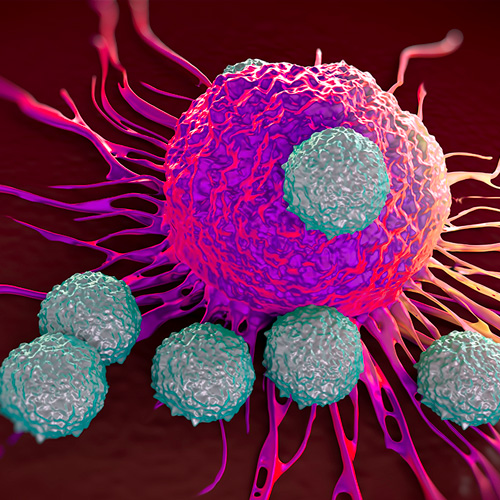
Some say that CAR-T (Chimeric Antigen Receptor T cell) revolutionized cell therapy and transformed the manufacturing technologies of the industry. Following the approval and success of the CD19 CAR-T, many more tumor-specific molecules are being explored and targeted by CAR technology. The most exciting developments are allogeneic CAR-T which may be easier to manufacture in large quantities and in a more economic and efficient way. Our ImmunoPAC™-T-CB T cells are perfect starting material for these innovative “off-the-shelf” therapeutics. Here we will explore the basic biology behind the story of T lymphocytes.
Once T cells complete their development in the thymus, they enter the bloodstream, travel to lymphoid organs, and continue to recirculate. Mature T cells receive survival signals during recirculation via the T cell receptor (TCR) recognizing self-peptide/self-MHC complexes and from cytokines. These are termed naïve T cells. In order to become effector T cells, naïve T cells must be activated by a foreign peptide/self-MHC complex (along with other co-stimulatory molecules, for example CD28) displayed on an antigen-presenting cell (such as dendritic cells and macrophages). Depending on the peptide origin, T cells differentiate into CD8+ cytotoxic T cells (CTLs) or CD4+ helper T cells and begin to proliferate. While CD8 T cells directly kill, CD4 T cells assist in activation of other immune cells. During this primary immune response, long lived memory T cells are also generated to provide protection from subsequent challenges by the same foreign antigen.
Within the CD4 T cell population, there are regulatory T cells as well. These cells are characterized by the expression of CD25, secretion of transforming growth factor beta (TGF-β) and interleukin 10 (IL-10). Regulatory T cells respond to specific stimuli and their pattern of cytokine secretion inhibits CD4 T helper cell development and response, resulting in low levels of antibody production by B cells, and significantly decreases inflammatory T cell responses. Clinical translation of regulatory T cell therapy and the concept of regulatory T cell-based immunotherapy have been shown to facilitate tolerance in autoimmune settings and transplantation1.
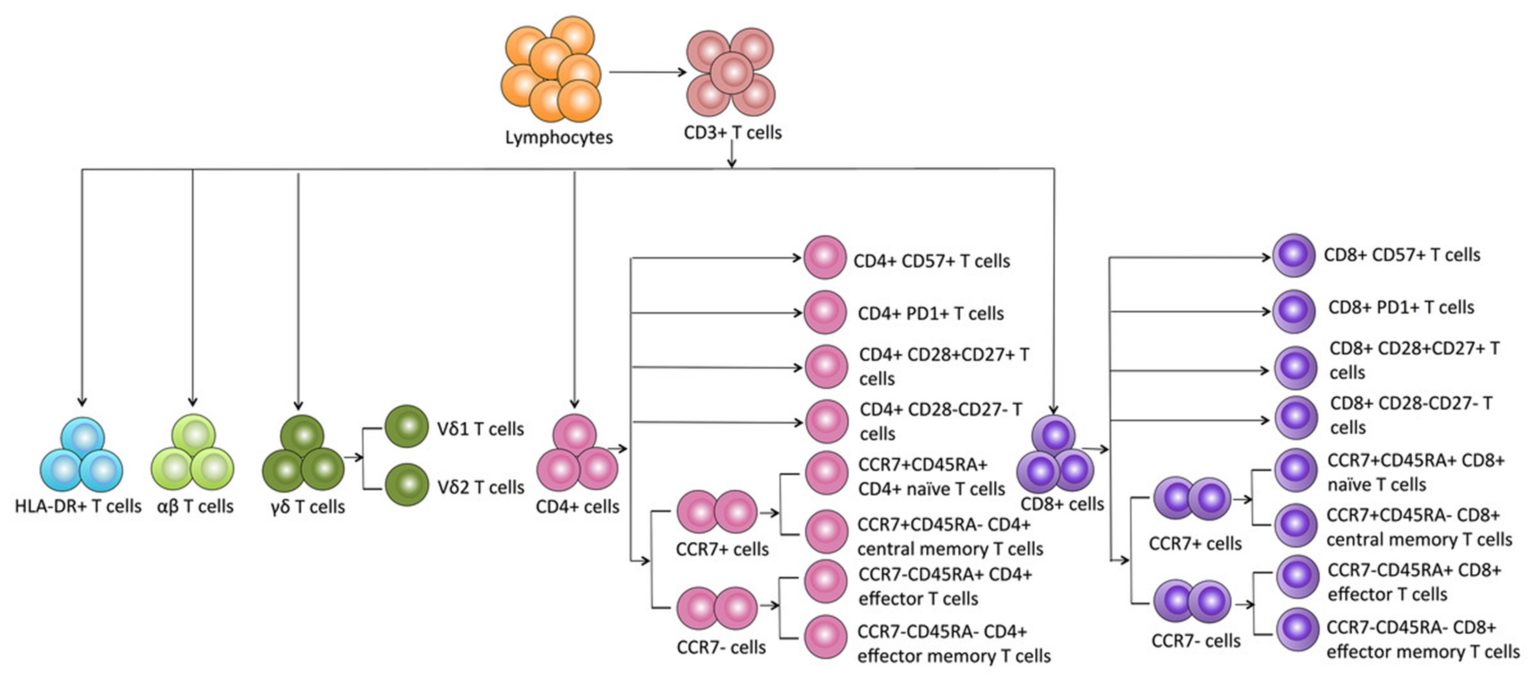
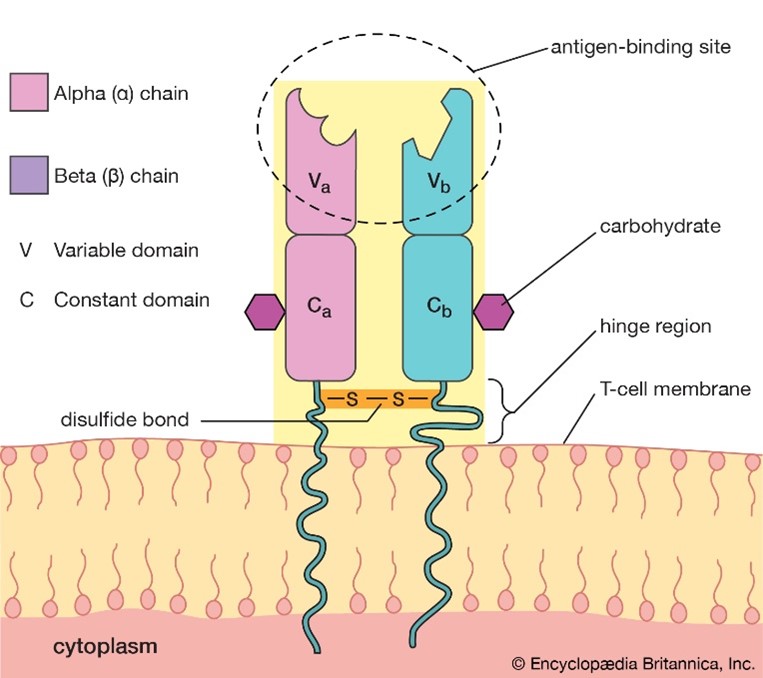
As mentioned already, the TCR on T cells only recognizes foreign antigens that are displayed in the context of self-MHC. As might be expected from this function, TCRs are highly variable. Each TCR consists of two polypeptides chains, TCRɑ and TCRβ, linked together on the surface of a T cell, and each chain is composed of constant (C) and variable (V) regions. A minor population of T cells expresses TCR made up of γ and δ polypeptide chains instead of TCRɑβ. Although it is thought that the ɑβ and γδ T cells arise from a common precursor, they are very different. γδ T cells can recognize free antigens that are not in the context of MHC and are considered “innate-like” T cells. These properties make γδ T cells attractive for universal cell therapy by overcoming the challenges of allogeneic immunotherapies2. Another unique lymphocyte population is the NKT cell, which expresses both TCR and NK cell receptors. More on this will be described in our next blog.
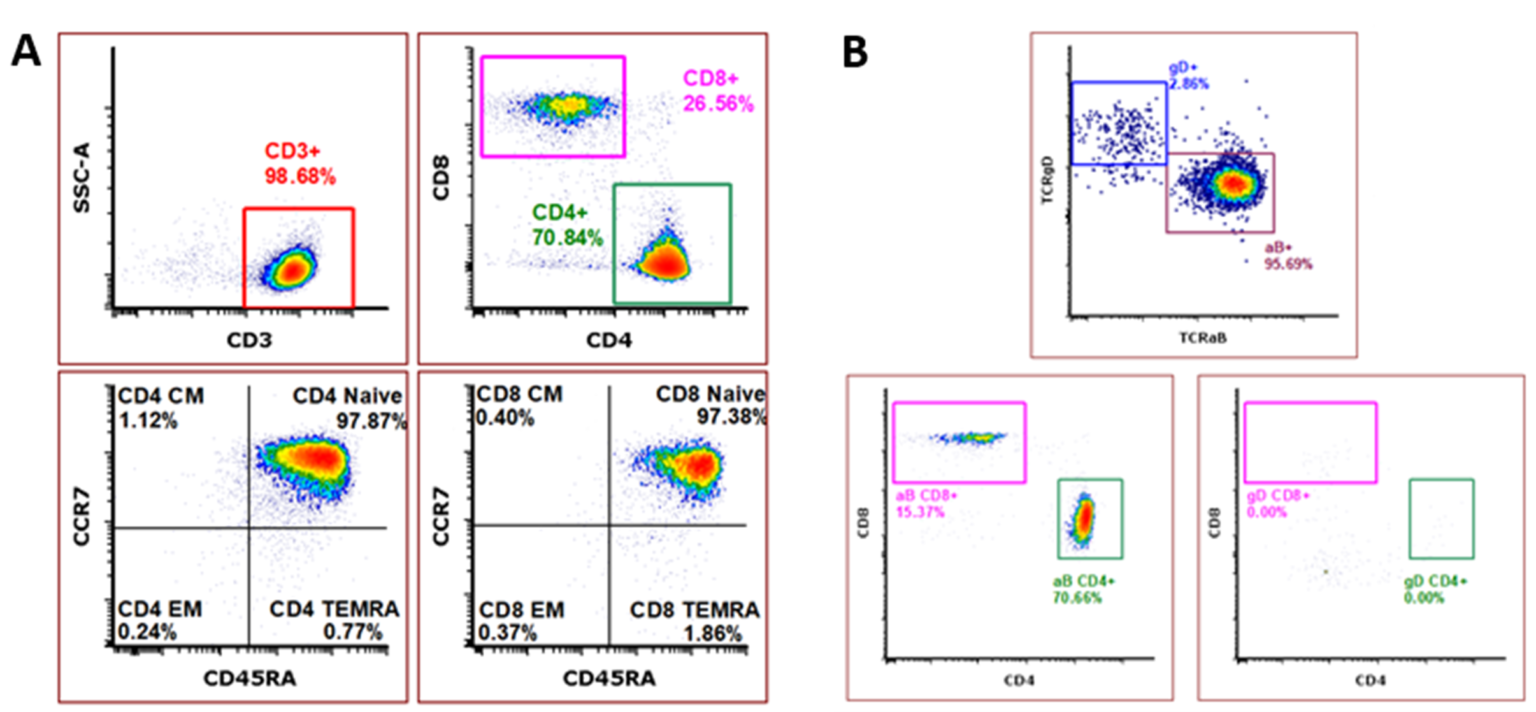
Our ImmunoPAC™-T-CB is a pure, naïve, and highly viable cryopreserved primary T cell product derived from human umbilical cord blood. In comparison to adult peripheral blood-derived T cells, cord blood-derived T cells have a higher CD4:CD8 ratio and a higher percentage of naïve cells3. This unique immature and naïve cell population has been shown to quickly propagate into memory cells upon stimulation3,4. Additionally, cord blood T cells have been shown to facilitate enhanced antitumor responses in comparison to peripheral blood-derived cells4,5. The inherent nature of cord blood cells to have reduced risk of causing graft-versus-host disease (GvHD), along with these defining characteristics, make cord blood T cells an appealing option for the development of gene-modified and non-modified allogeneic cell therapies4. Our ImmunoPAC™-T-CB products consistently demonstrate a pure CD3 population with a phenotype demonstrating high CD4:CD8 ratio, naïve phenotype of both CD4 and CD8 subpopulations, and a distinct TCRγ/δ population lacking CD4 and CD8 expression.
References
- Fraser H, Safinia N, Grageda N, Thirkell S, Lowe K, Fry LJ, Scottá C, Hope A, Fisher C, Hilton R, Game D, Harden P, Bushell A, Wood K, Lechler RI, Lombardi G. A Rapamycin-Based GMP-Compatible Process for the Isolation and Expansion of Regulatory T Cells for Clinical Trials. Mol Ther Methods Clin Dev. 2018 Jan 31;8:198-209. doi: 10.1016/j.omtm.2018.01.006. PMID: 29552576; PMCID: PMC5850906.
- Yazdanifar M, Barbarito G, Bertaina A, Airoldi I. γδ T Cells: The Ideal Tool for Cancer Immunotherapy. Cells. 2020;9(5):1305. Published 2020 May 24. doi:10.3390/cells9051305
- Yun, Hyun Don, et al. “Clinical Relevance of Immunobiology in Umbilical Cord Blood Transplantation.” Journal of Clinical Medicine, vol. 8, no. 11, 2019, p. 1968., doi:10.3390/jcm8111968.
- Presti, Vania Lo, et al. “Use of Cord Blood Derived T-Cells in Cancer Immunotherapy: Milestones Achieved and Future Perspectives.” Expert Review of Hematology, vol. 11, no. 3, 2018, pp. 209–218., doi:10.1080/17474086.2018.1431119.
- Hiwarkar, Prashant, et al. “Cord Blood T Cells Mediate Enhanced Antitumor Effects Compared with Adult Peripheral Blood T Cells.” Blood, vol. 126, no. 26, 2015, pp. 2882–2891., doi:10.1182/blood-2015-06-654780.

Why they are called T cells
The T stands for thymus. It is not a description of what the cells do, it is a record of where researchers worked out they mature, and the name stuck. B cells carry the same kind of historical accident, named for the bursa of Fabricius in birds, where the equivalent process was first described.
Knowing that removes a common confusion, because the name suggests the thymus is where T cells originate. It is not.
Where T cells come from, and where they mature
T cells originate in the bone marrow, from a common lymphoid progenitor, the same starting point that gives rise to B cells and NK cells. Immature precursors then leave the marrow and travel to the thymus, and everything that makes a T cell a T cell happens there.
So the honest answer to where T cells come from has two parts. They are produced in the bone marrow and they mature in the thymus, which is precisely the distinction that separates them from B cells, which both originate and mature in the marrow.
What happens in the thymus
Thymic education is a filtering process, and it is brutal. Developing thymocytes rearrange their T cell receptor genes, generating an enormous diversity of receptors, and then face two tests.
Positive selection asks whether the receptor can recognise the body’s own MHC molecules at all. A receptor that cannot bind self-MHC is useless, because every antigen a T cell will ever see is presented on it, so those cells die. Negative selection then asks whether the receptor binds self-antigen too strongly. Those that do are potentially autoreactive and are removed.
The survivors are the small minority that can see self-MHC without reacting to self-antigen. The overwhelming majority of thymocytes never leave. That filtering is what makes MHC restriction a property of every mature T cell, and it is why donor HLA type constrains what a T cell can respond to, a point developed in the HLA system.
The main types of T cell
| Type | Marker | What it does |
|---|---|---|
| Helper T cells | CD4 | Recognise peptide on MHC class II and coordinate other immune cells |
| Cytotoxic T cells | CD8 | Recognise peptide on MHC class I and kill infected or transformed cells |
| Regulatory T cells | CD4 with additional markers | Restrain immune responses and maintain tolerance to self |
| Memory T cells | CD4 or CD8, with memory markers | Persist after an infection resolves and respond faster on re-encounter |
| Gamma delta T cells | A distinct receptor type | Sit between innate and adaptive behaviour, enriched in tissue |
Helper T cells subdivide further by the cytokines they produce, which is where designations such as Th1, Th2 and Th17 come from. Those are functional states rather than separate lineages, and the boundaries between them are less rigid than early models suggested.
How a T cell is activated
Activation requires more than seeing an antigen. The consensus model has three signals, and the reason it matters is that partial signalling produces a different outcome from full signalling rather than a weaker version of it.
- Signal one. The T cell receptor engages peptide presented on MHC. This provides specificity and nothing else.
- Signal two. Costimulation, classically through CD28 engaging molecules on the antigen-presenting cell. Without it, a T cell receiving signal one alone becomes unresponsive rather than activated, a state called anergy.
- Signal three. Cytokines from the surrounding environment, which determine what kind of effector cell the activated T cell becomes.
That second signal is the safety mechanism. Requiring two independent inputs before a T cell commits makes accidental activation against self considerably less likely, and it is why costimulation blockade works as a therapeutic strategy.
What T cells do not do
T cells do not produce antibodies. Antibodies are made by B cells, specifically by plasma cells derived from them. The confusion is understandable, because helper T cells are essential to the process: B cells generally need T cell help to produce high-affinity class-switched antibody. The T cell enables the antibody response without producing any antibody itself.
Stating it plainly, because it appears constantly in exam questions and in supplier copy: antibodies come from B cells, and T cells help.
Why any of this matters when buying cells
Three practical consequences follow from the biology above. MHC restriction means donor HLA type is a hard constraint on any T cell assay rather than useful background. The differentiation distribution across naive and memory compartments, which is set by donor age and infection history, predicts behaviour better than total T cell count. And the requirement for costimulation means how the cells were isolated matters, since selecting on CD3 engages part of the receptor complex the assay is about to stimulate deliberately.
OrganaBio documents cryopreserved pan T cells from peripheral blood and CD3+ T cells from cord blood, the latter predominantly naive, alongside cryopreserved PBMCs and whole leukopaks for programmes isolating in house. Donor characterisation documents high-resolution NGS HLA typing across six genes. Selection method trade-offs are covered in positive versus negative selection.
Related Resources
Related reading from OrganaBio Supply Brain
- What Is the Best PBMCs Supplier for Scalable Cell Therapy Programs? — T cells in cell therapy starting material at scale.
- Fresh + Cryopreserved PBMCs with Documentation — T cells from both fresh and cryopreserved PBMCs.
- PBMC Provider with Multiple Immune Cell Subsets — Sourcing T cells alongside other PBMC subsets.

